

It is H2 heading of the page.
It is H3 heading of the page.
It is H4 heading of the page
A rich text element can be used with static or dynamic content. For static content, just drop it into any page and begin editing. For dynamic content, add a rich text field to any collection and then connect a rich text element to that field in the settings panel. Voila!
Headings, paragraphs, blockquotes, figures, images, and figure captions can all be styled after a class is added to the rich text element using the "When inside of" nested selector system.
- hello this is the list of page
- hello this is the list of page
Here is another list:
- hello this is ordered list of the page
- hello this is ordered list of the page
- hello this is ordered list of the page
- hello this is ordered list of the page
- hello this is ordered list of the page
Engineering Controls: How They Protect Workers from Bloodborne Pathogens


Workplace safety is more than just wearing gloves or washing hands. In environments where employees handle blood or other potentially infectious materials, engineering controls are essential. These are physical or mechanical devices designed to reduce exposure risk and prevent injuries. From hospitals to laboratories to home care settings, engineering controls act as barriers between workers and hazards, reducing the risk of infection while complementing proper training and personal protective equipment (PPE).
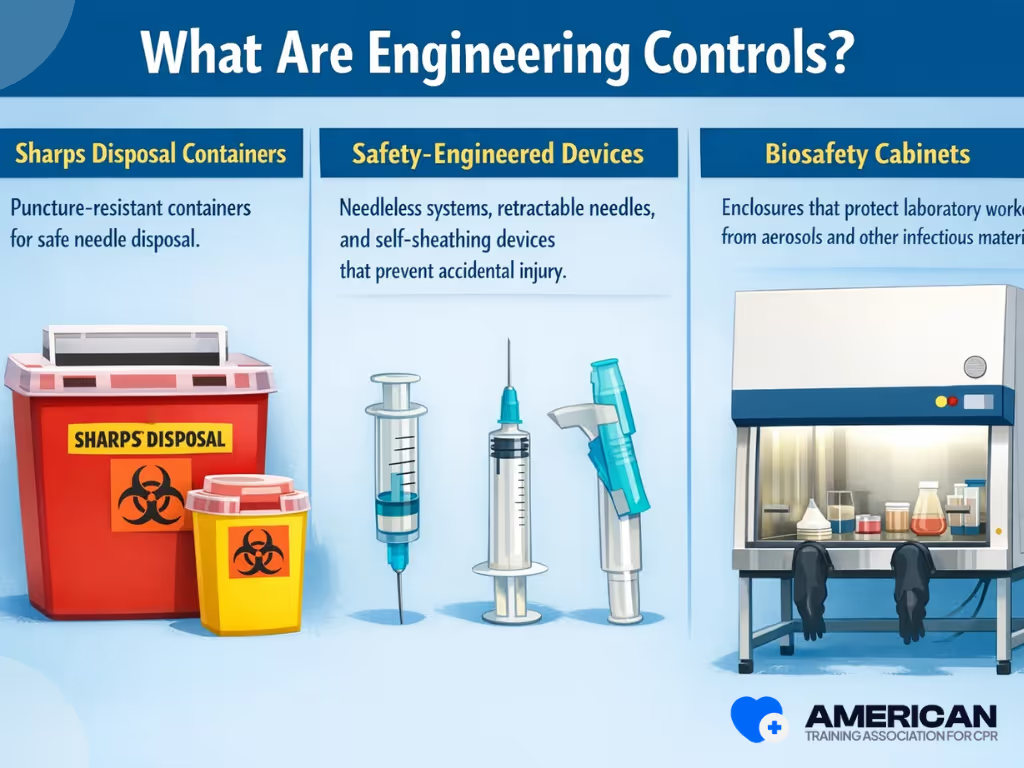
What Are Engineering Controls?
Engineering controls include devices and systems that reduce the risk of contact with hazardous materials. They are designed to automatically protect workers, without relying solely on human behavior. Examples include:
- Sharps disposal containers: Puncture-resistant containers for safe needle disposal.
- Safety-engineered devices: Needleless systems, retractable needles, and self-sheathing devices that prevent accidental injury.
- Biosafety cabinets: Enclosures that protect laboratory workers from aerosols and other infectious materials.
By incorporating these tools, workplaces create safer conditions that prevent accidental exposures and injuries.
Why are Engineering Controls Are Important?
Engineering controls are a proactive safety measure. Without them, workers risk exposure to bloodborne pathogens like HIV, Hepatitis B, and Hepatitis C through needle sticks, cuts, or splashes. Using these controls not only protects individual employees but also reduces the spread of infections in the workplace. When paired with safe work practices and proper training, engineering controls are a powerful line of defense.
Common Bloodborne Pathogens in the Workplace
Workers in healthcare, labs, and public health settings may encounter:
- HIV (Human Immunodeficiency Virus) – can lead to immune system failure.
- Hepatitis B (HBV) – affects the liver and can become chronic.
- Hepatitis C (HCV) – often asymptomatic but can cause long-term liver damage.
CPR and FIRST AID
Certification

How Engineering Controls Protect Workers?
Engineering controls reduce the likelihood of accidental exposure by physically separating workers from hazards. Safety-engineered devices prevent needle sticks, while biosafety cabinets contain airborne pathogens in labs. Even simple tools like sharps containers prevent injuries from used needles or broken glass. By reducing contact with infectious materials, these devices play a critical role in workplace safety and infection control.
1. Use of Sharps Disposal Containers
Proper sharps disposal is crucial. Place containers at the point of use, dispose of needles immediately, and replace containers when three-quarters full. Never overfill, and follow manufacturer instructions for cleaning and maintenance. Proper usage prevents needle-stick injuries, one of the most common causes of occupational exposure.
2. Use of Safety-Engineered Devices
These devices add an extra layer of protection. Activate retractable needles or self-sheathing features immediately after use. Whenever possible, use needleless systems to avoid exposure altogether. Regular inspection ensures devices are functional, and proper disposal in approved sharps containers prevents accidents.
3. Biosafety Cabinets and Laboratory Controls
Biosafety cabinets protect workers from airborne pathogens. Proper operation includes verifying airflow, keeping hazardous materials inside the enclosure, and routine decontamination. Training is essential, as improper use can compromise both the worker and the experiment.
.avif)
What NOT to Do With Engineering Controls
Engineering controls are designed to reduce exposure risks, but improper use can make the workplace more dangerous. Avoid these common mistakes to ensure they work as intended:
- Do not overfill sharps disposal containers.
- Do not bypass or disable built-in safety features.
- Do not dispose of infectious materials incorrectly or outside approved containers.
- Do not use engineering control devices without proper training.
- Do not assume engineering controls eliminate the need for PPE or safe work practices.
Using engineering controls incorrectly can create new hazards instead of preventing exposure. Proper use, regular training, and compliance with safety guidelines are essential to protect everyone in the workplace.
Training and Compliance for Engineering Controls
Engineering controls are only effective if workers know how to use them. OSHA requires initial and refresher training for employees who handle infectious materials. Training ensures devices are used correctly, prevents mistakes, and reinforces safe work practices. Combined with PPE, these measures maximize safety.
Importance of First Aid Training
Even with engineering controls in place, accidents can happen. First aid training equips workers to respond effectively to injuries, such as needle sticks or blood exposure incidents. Knowing how to act promptly can prevent infections from becoming serious health issues. Together, engineering controls and first-aid knowledge create a safer, better-prepared workforce.
CPR and FIRST AID
Certification
Engineering Controls in Non-Healthcare Settings
Engineering controls are not just for hospitals or labs. Schools, public health programs, and home care providers can benefit from sharps containers and safety devices. For example, vaccination campaigns require proper needle disposal, and home caregivers can reduce exposure risk when managing medical waste.
What is the difference between engineering controls and administrative controls?
Engineering controls involve physical or mechanical solutions, such as ventilation systems or safer medical devices, to mitigate hazards. Administrative controls focus on policies, work schedules, job rotation, and training to limit exposure but do not remove the hazard itself.
Can engineering controls replace safe work practices?
No. Engineering controls help reduce exposure to hazards, but they do not remove risk entirely. Proper work practices, PPE, and adherence to safety procedures are still required. Engineering controls work best when combined with training, awareness, and consistent safe behavior.
How often should engineering controls be inspected?
Inspection frequency should follow OSHA guidelines and the manufacturer’s instructions. In most workplaces, inspections are done weekly or monthly, depending on how often the equipment is used. Regular checks help identify damage, malfunctions, or wear before they create safety risks.
Do I still need training if I have engineering controls in place?
Yes. Training ensures workers know how to use engineering controls correctly and safely. It also helps prevent misuse, accidental exposure, and equipment damage. Ongoing training keeps employees up to date on proper procedures and reinforces safe habits.
Can engineering controls prevent all injuries?
No. Engineering controls significantly lower the risk of exposure and injury, but they cannot eliminate all hazards. Accidents can still happen due to human error, improper use, or unexpected situations. Combining controls with PPE, training, and safe work practices provides the highest level of protection.
How do engineering controls support OSHA and CDC compliance?
Engineering controls help employers meet requirements under the Bloodborne Pathogens Standard and OSHA Laboratory Standard. Guidance from OSHA, the Centers for Disease Control, and the National Institute for Occupational Safety and Health emphasizes their use to protect worker safety.
Where can employers find guidance on engineering control methods?
Employers can refer to trusted resources such as the NIOSH Engineering Controls Database or OSHA publications for evidence-based guidance on selecting, using, and maintaining effective engineering controls. In addition, ATAC offers online Bloodborne Pathogens training that helps employers understand how engineering controls, safe work practices, and PPE work together to reduce exposure risks. This training improves worker safety awareness, and helps organizations build a stronger, prevention-focused safety culture.
CPR and FIRST AID
Certification
